 marinepoint


Antifouling: the main types and which one suits your boat
2026-07-19 · Marine Point
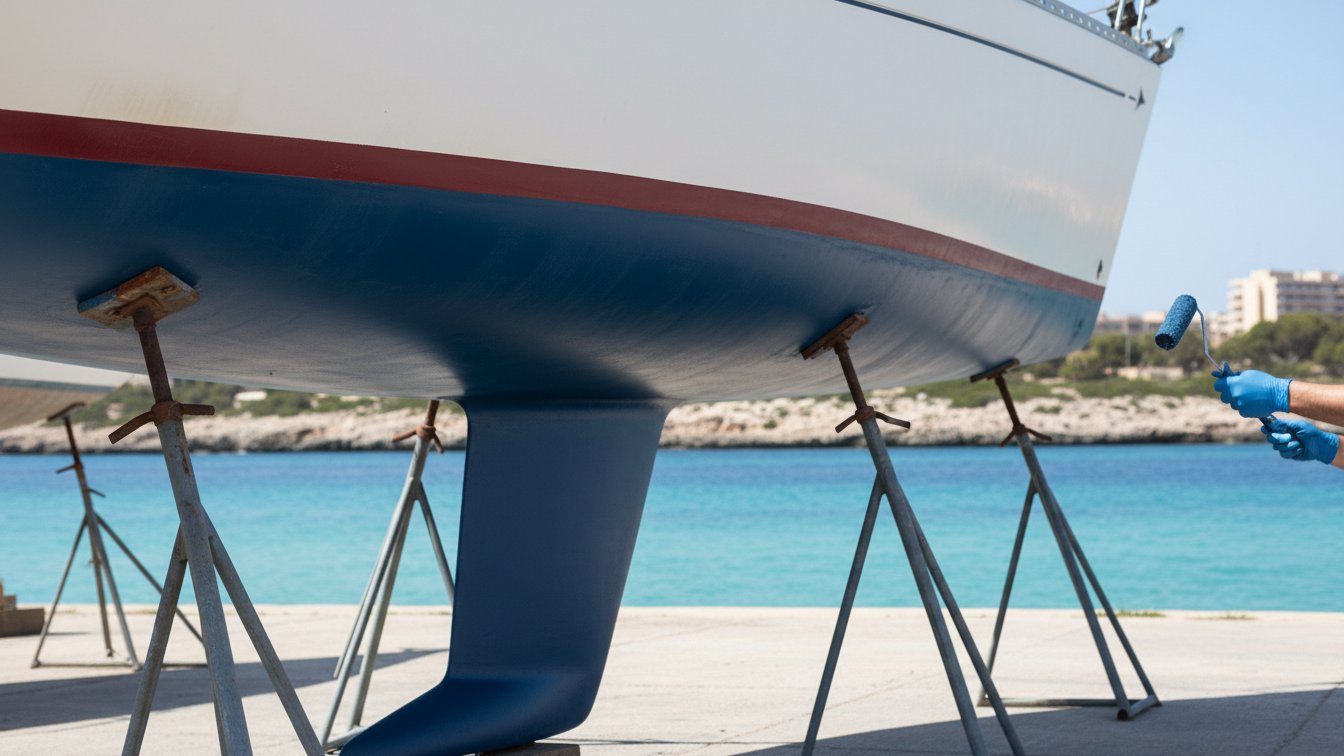
Antifouling is one of those purchases where a mistake costs you twice: you pay for the paint and you pay for the boatyard. Getting it right comes down to three things: your hull, your waters and — the one almost everyone forgets — how much you actually go out.
The three main types
Self-polishing. The coating wears away as the boat moves, constantly renewing the biocide. Ideal for boats that get used regularly. If the boat spends 90% of its time on the mooring, it barely polishes and protects less than it promises.
Hard matrix. It stands up to abrasion: the choice for fast boats, trailered RIBs and boats that are scrubbed or hauled out often. It takes a mid-season hull clean without the paint coming off with the sponge.
The special cases. Sterndrives and propellers take their own specific paint (never the hull antifouling on aluminium: galvanic corrosion shows no mercy), and aluminium hulls demand copper-free formulas.
In Balearic waters
Warm water and a long season mean aggressive fouling from May to October. Our experience with island customers: on a boat with average use, one generous coat before launch with extra reinforcement along the waterline and under the stern gives better results than two thin coats. And the bottom needs preparing: a light sanding, a primer if you are switching paint types, and respect the manufacturer's drying times.
When to apply it?
The classic slot is the spring haul-out, but if you are reading this in midsummer with a hull like a reef, a dry scrub and a touch-up with hard matrix will save what is left of your season.
We keep paints, antifouling and all the application material in stock, and we can advise you based on your boat and your harbour — ask us before you buy, because paint can't be returned once opened.