 marinepoint


Ladders and access: prepare for safe bathing in spring
2026-09-21 · Marine Point
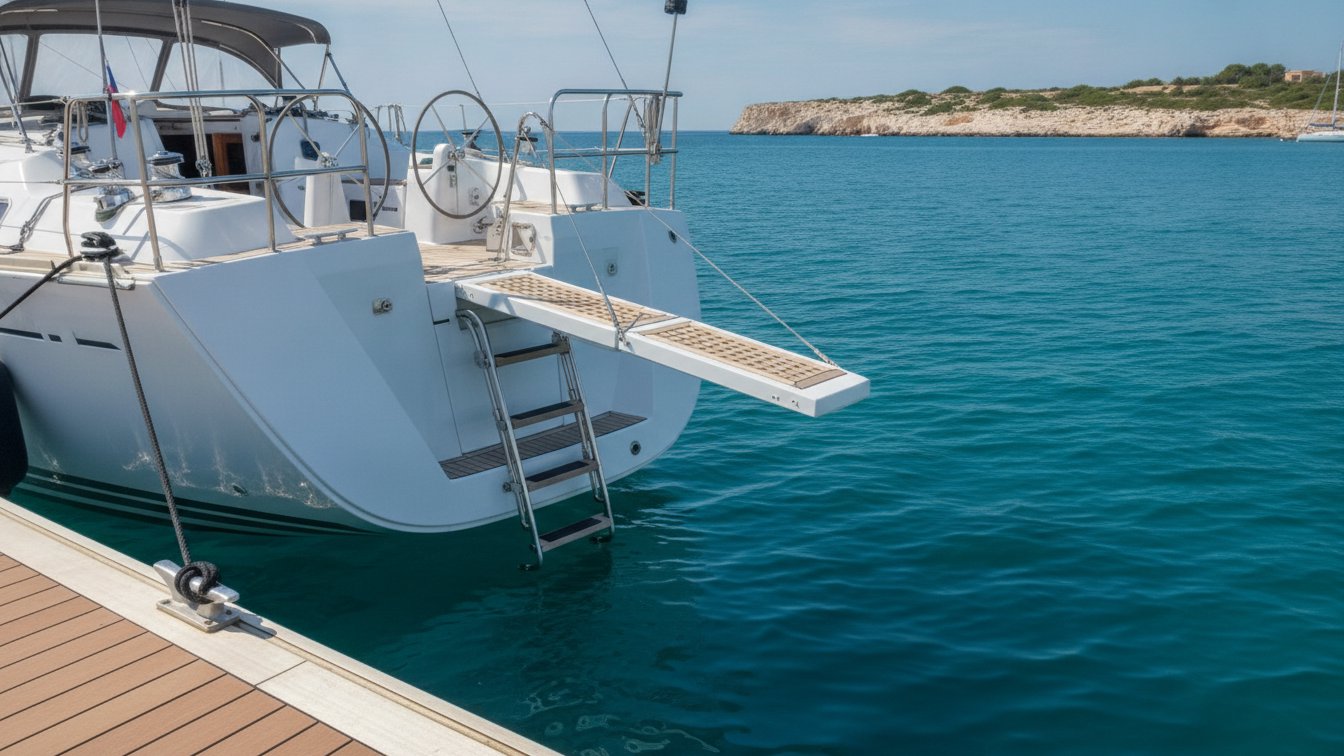
Next spring may seem a long way off when the season ends, but it is a good time to plan an inspection of access to the water. In the Balearics, where swimming is part of almost every day on board between May and October, a bathing ladder or gangway in good condition is not a secondary accessory: it makes getting on and off comfortably easier and reduces risks when boarding from the pontoon, a tender or the sea. We recommend checking the whole set-up carefully and choosing what each boat really needs, rather than simply the most expensive option.
Checking the bathing ladder before fitting it
The first step is to check the general condition of the ladder: its structure, steps, joints, stops, pins and attachment points. We will look for play, deformation, edges that could catch or damage the skin, and signs of corrosion, especially in a warm saltwater environment like ours.
It is also worth checking that it deploys and stows without unusual effort. A ladder that jams may be inconvenient in port, but it can become a serious problem if someone needs to get back on board quickly. The steps must provide firm footing and the design should allow a reasonably natural climb, without forcing awkward positions by the stern.
If we find cracks, a fatigued fixing or have doubts about the strength of the assembly, we do not recommend improvised structural repairs. The sensible approach is to have a professional assess the installation and determine whether components should be repaired or replaced.
Dimensions and location: every stern has its constraints
Not every boat can accommodate the same ladder or the same mounting position. Before choosing, we need to measure the available space, check the stern geometry and allow for the opening path. We must avoid interference with platforms, lockers, engines, fenders, lines or equipment that is regularly used.
The height above the water and the depth reached by the deployed ladder have a direct effect on ease of use. We should also consider who will use it: a boat intended for active outings with friends is not the same as one designed for family enjoyment or for welcoming people with reduced mobility. The right solution is the one that provides stable access without obstructing manoeuvres or compromising other elements of the boat.
In our gangways and ladders category, we bring together options for planning access on board according to the available space and intended use.
Gangways for boarding with greater control
In island berths, the distance to the pontoon and the movement of the boat can vary depending on the port, wind and sea state. A well-sized gangway helps you board and disembark with greater control, but it must be selected with both its support and stowage in mind.
We will check that the contact ends do not damage the deck or pontoon and that the fastening system is compatible with the area where it will be installed. We must not use a gangway as though it were a mooring element or load it beyond the use for which it was designed. When there is swell, a significant difference in height or instability, the safest option may be to wait until conditions allow the manoeuvre.
Fixings and maintenance that should not be postponed
A good ladder or gangway depends on correct fixing. It is advisable to inspect bolts, reinforcement plates, seals and load points from both sides of the installation whenever possible. The deck must withstand the expected load; if we are not certain about its structure, it is essential to consult a professional before drilling or modifying anything.
After each period of intensive use, we recommend rinsing with fresh water, drying moving parts and removing salt, sand or organic residue. This is simple maintenance that helps identify wear before spring arrives. If you need to check dimensions or compatibility, or discuss an installation, you can write to us through our contact page.