 marinepoint


Boat batteries: how to choose them and prepare them for winter
2026-10-05 · Marine Point
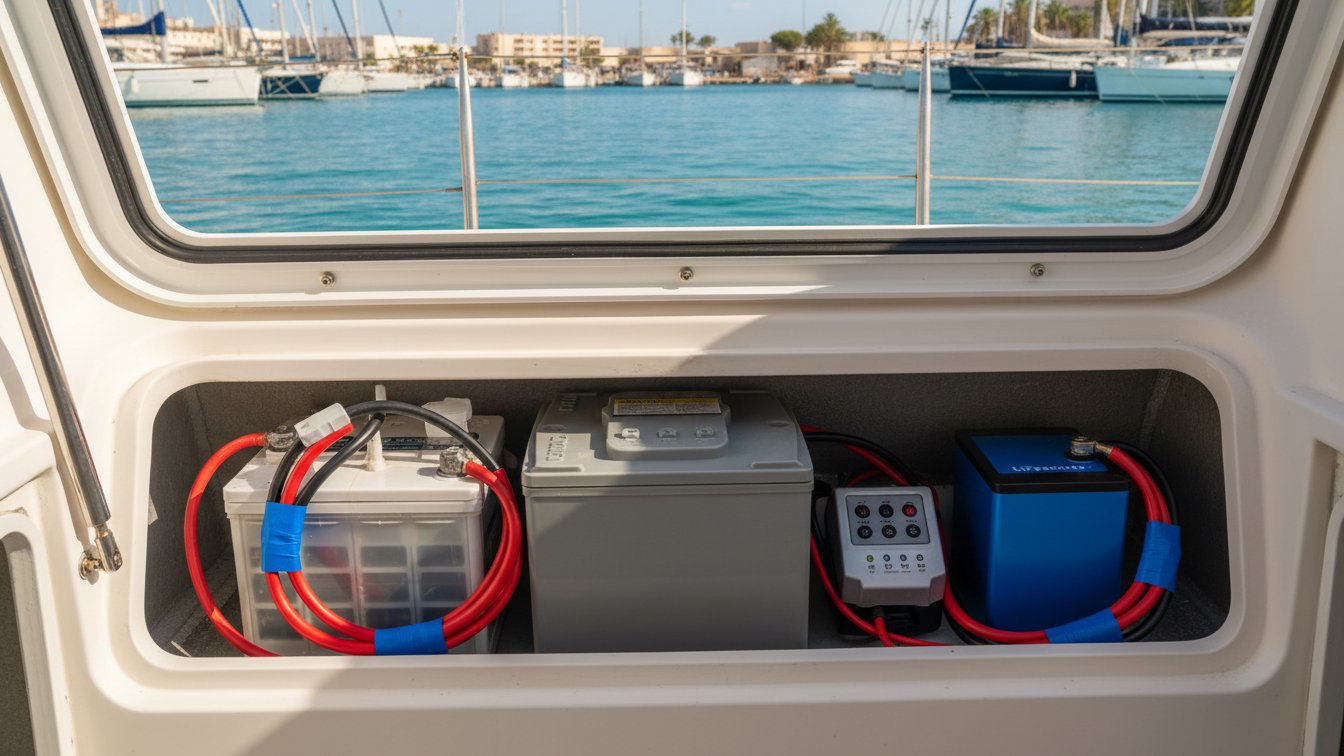
At the end of the season, it’s not enough to switch off the main switch and forget about the batteries. The right choice depends on how you use the boat, the existing installation and how long the vessel will be left unused. In the Balearic Islands, winters are usually mild, but months without use and small, continuous discharges can also shorten a battery’s life. We’ll explain what’s worth checking before leaving your boat ashore or at its berth.
Flooded lead-acid, AGM or lithium: what’s the difference?
Flooded lead-acid batteries are often a straightforward option for conventional installations, but they need checking and, if the manufacturer says so, the electrolyte level must be checked. To do this, follow the battery instructions, use appropriate protection and work in a well-ventilated area, away from flames or sparks. If you don’t have experience, it’s best to ask for help.
AGM batteries are sealed lead-acid batteries: they don’t need the electrolyte topped up, but they do need suitable charging and regular checks. Lithium batteries can offer lower weight and good usable capacity, but they’re not a direct replacement on every boat: you need to check that the charger, installation and battery management system (BMS) are compatible. Don’t choose on technology alone; also consider actual power consumption and how you use the vessel.
You can browse our selection of marine electrical equipment and accessories and ask us for guidance if you have questions about compatibility.
Charger and maintainer: make sure they’re suitable
The charger must have a profile compatible with the battery chemistry. A charger designed for lead-acid batteries won’t always work with lithium, and some chargers let you select the battery type: check the settings before connecting it. A maintainer can be useful during an extended period out of use, but only if it’s designed for that purpose and the battery manufacturer allows it.
Don’t rely on an old charger without checking its specifications, and don’t leave a battery connected to unsuitable equipment. If you share a charger between batteries with different technologies, check that the system allows this to be done correctly. If the installation has been modified or is unclear, we recommend having a professional check it.
Before leaving the boat unused
Leave the batteries at a suitable charge level, following the manufacturer’s instructions. Then identify any equipment that may still be drawing power — for example, monitoring equipment or pumps — and don’t disconnect it without checking what it does. Isolate the circuits you don’t need and disconnect the battery only as described in the boat’s manual; doing this incorrectly can affect other systems.
Keep the terminals clean and dry, and check for corrosion, loose cables, deformation or leaks. If you’re going to leave a maintainer connected, make sure the installation is suitable and the area is ventilated. During the winter, it’s worth carrying out regular checks, especially if the boat is left at its berth and there are residual power draws.
If something doesn’t seem right, don’t improvise
An unusual smell, overheating, visible damage or a battery that loses charge quickly are reasons to stop using it and arrange an inspection. Don’t open a sealed battery or try to repair a damaged unit. And if you’re not sure which circuit to isolate or which charger is right for your installation, we can help you assess the next steps: contact our team. We’d rather recommend what you need, not what costs the most.