 marinepoint


Inspecting Your Anchoring Equipment After the Season
2026-10-19 · Marine Point
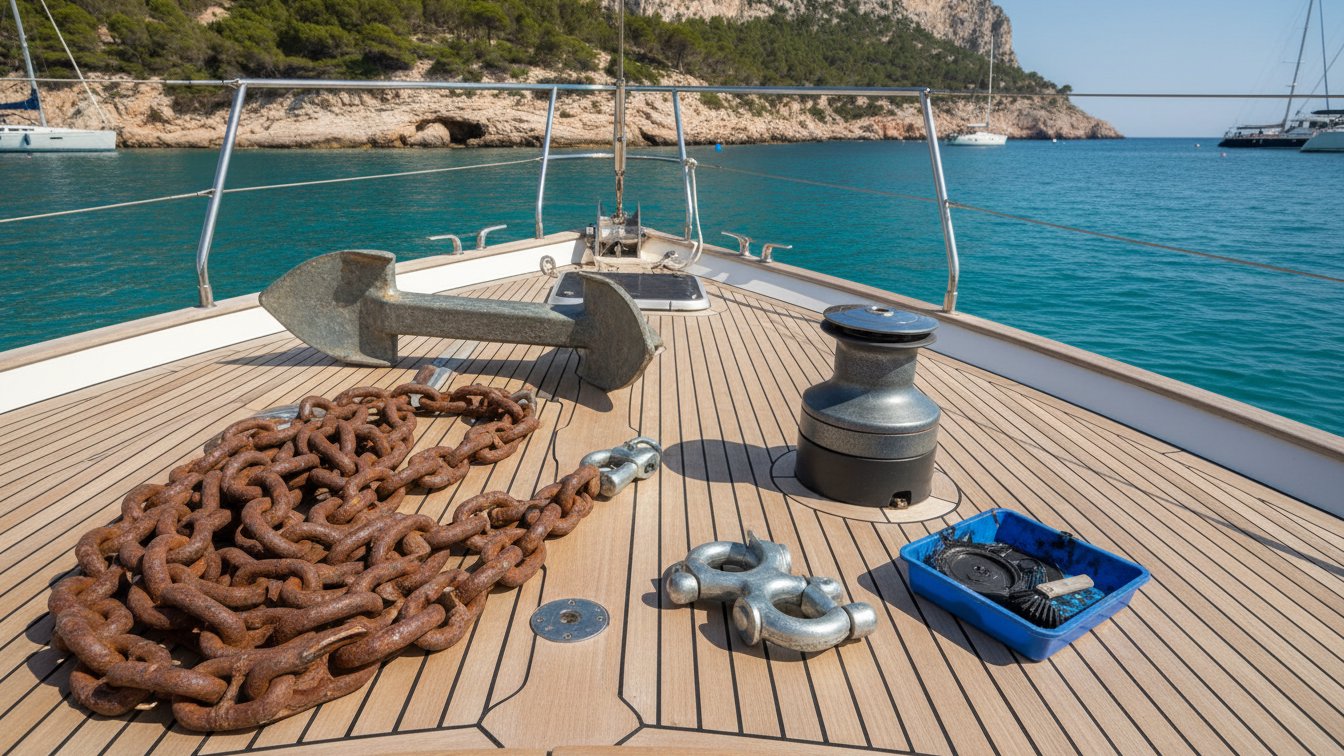
At the end of the season, it’s worth taking the time to inspect your anchoring equipment before storing it or using it again. In the Balearic Islands, the months from May to October usually involve a lot of anchoring; warm water, salt and frequent use also take their toll. This inspection complements our guide to choosing an anchor and chain: here, we focus on spotting wear and getting the whole set ready for your next trip.
Anchor and chain: look for signs of wear
With the equipment secured and out of the water, clean the chain so you can inspect every section. Look for deformed links, cracks, deep corrosion or areas of uneven wear. Pay particular attention to the points that work hardest as the chain passes over the gypsy, and to the connection with the anchor. If you notice any damage, don’t assume the rest is in good condition: it’s worth inspecting the entire length used during the season.
Check that the anchor has no deformations, cracks or loose parts. Surface dirt can hide damage, so rinse and clean it without using methods that could damage the finish. If you have any doubts about the condition or compatibility of the components, don’t improvise a repair: consult a professional. To replace or inspect system components, you can browse our windlasses and accessories category.
Shackles and swivel
Inspect the shackle connecting the chain to the anchor: look for wear on the body, abnormal play, corrosion and damage to the pin. Check that it closes properly and cannot come loose during use. Don’t mix parts just because they fit; if the connection isn’t clear or has play, ask for advice before anchoring again.
The swivel should move smoothly, without seizing or deforming. Inspect its connections and check for any signs of opening or concentrated wear. If it doesn’t turn freely, makes noises or has play, it’s safer to replace it or have it inspected than to trust it to work under load.
Windlass: cleaning, lubrication and brushes
Before carrying out any work, follow the manufacturer’s instructions and isolate the electrical supply. Keep hands and clothing away from the chain and moving parts; don’t test the windlass with the equipment exposed or uncontrolled. Remove salt and accumulated debris with appropriate cleaning, and inspect the condition of the gypsy, controls and visible connections.
Lubricate only the points specified for that equipment, using the recommended product: applying lubricant indiscriminately can attract dirt or affect components. The brushes can also wear with use. If the windlass loses power, runs irregularly or needs to be opened to check the brushes, we recommend having it inspected by a technician. Don’t force the mechanism if the chain jams.
Get it ready for your next trip
After the inspection, store the chain clean and as dry as possible, and secure the anchor properly to prevent it from knocking about during sailing or transport. In Balearic areas with Posidonia seagrass meadows, anchoring carefully and respecting protected areas helps preserve the seabed; a proper inspection also helps ensure the equipment works when you need it.
At Marine Point, since 2006, we’ve recommended what you need, not the most expensive option. If you find significant wear or aren’t sure whether a part needs replacing, contact our team before using the equipment again.