 marinepoint


Checking lifejackets and expiry dates at mid-season
2026-08-10 · Marine Point
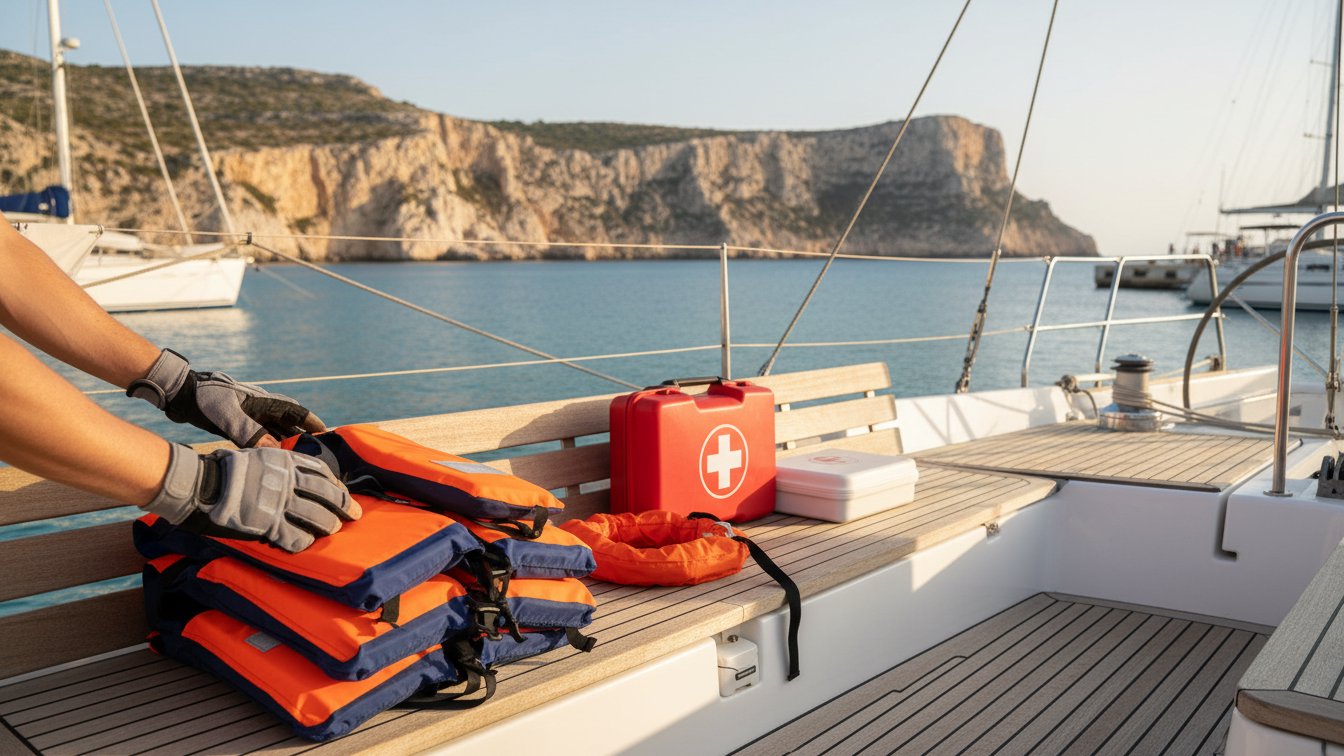
In midsummer, with plenty of passages already logged, it is worth stopping for a few minutes to check the safety gear. In the Balearics the season runs long, the heat punishes stowed equipment and salty damp finds its way into every locker. This is not about replacing gear out of routine, but about confirming what is actually fit to respond if needed. We recommend checking what needs checking and, with any doubt about a piece of life-saving equipment, bringing in a professional.
Lifejackets: visual inspection and upkeep
Start by taking every lifejacket out of its stowage. On permanent-buoyancy models, check seams, straps, buckles, zips and any chafe marks. Also make sure there is no mould, trapped moisture or deformation from being stored compressed.
On inflatable lifejackets, the check must be even more careful. Always follow the manufacturer's specific instructions: inspect the outer cover, the inflation mechanism, the gas cylinder and the closures. If you see corrosion, damage, signs of previous triggering, or you don't know its service history, don't assume it is fit for use. Better to have it serviced before wearing it again.
Also confirm that each lifejacket is accessible, suitable for the person who will wear it and properly adjustable. A lifejacket buried at the bottom of a locker, or in the wrong size, provides little safety.
Salt tablets and automatic systems
The so-called salt tablets, or water-soluble elements, are part of the automatic firing system on certain inflatable lifejackets. They are exposed to damp, spray and condensation even if the jacket has never been in the water. That is why it is best not to wait until the end of the season to check their condition and their marked date.
We don't recommend improvising with spares or mixing components that don't belong to the jacket's model. Check the equipment's manual and replace the element when due, following the manufacturer's indications. If the mechanism shows signs of activation, deterioration or doubtful assembly, the right move is a specialist service centre.
Flares and signals: visible dates and dry stowage
Flares and other pyrotechnic signals need special attention. Check their expiry dates, make sure the markings are legible and keep them protected from knocks, water and excessive heat. A compartment baking in the sun for weeks is not the place for this material.
It is also important to separate checking from disposal: expired pyrotechnics must not go in the rubbish or be tested on your own account. They must be handed in and dealt with through the authorised channels. The applicable requirements can vary with the boat and its navigation area, so if you have doubts about the required equipment or about replacing signals, ask a professional.
First aid kit and practical restocking
The first aid kit deserves a simple but methodical check: expiry dates, opened containers, deteriorated dressings, damp material and the contents list that corresponds to your boat. After several months of outings, it is common to have used something and not replaced it.
A good habit is to keep the kit in a known, dry and accessible spot, away from extreme temperatures. To round off a mid-season safety check, you can browse our life-saving, lifejackets, first aid and liferafts category. If you need help identifying a compatible spare or judging the state of a piece of equipment, we are available at contact.