 marinepoint


Mooring lines: materials, sizes and when to renew them
2026-07-27 · Marine Point
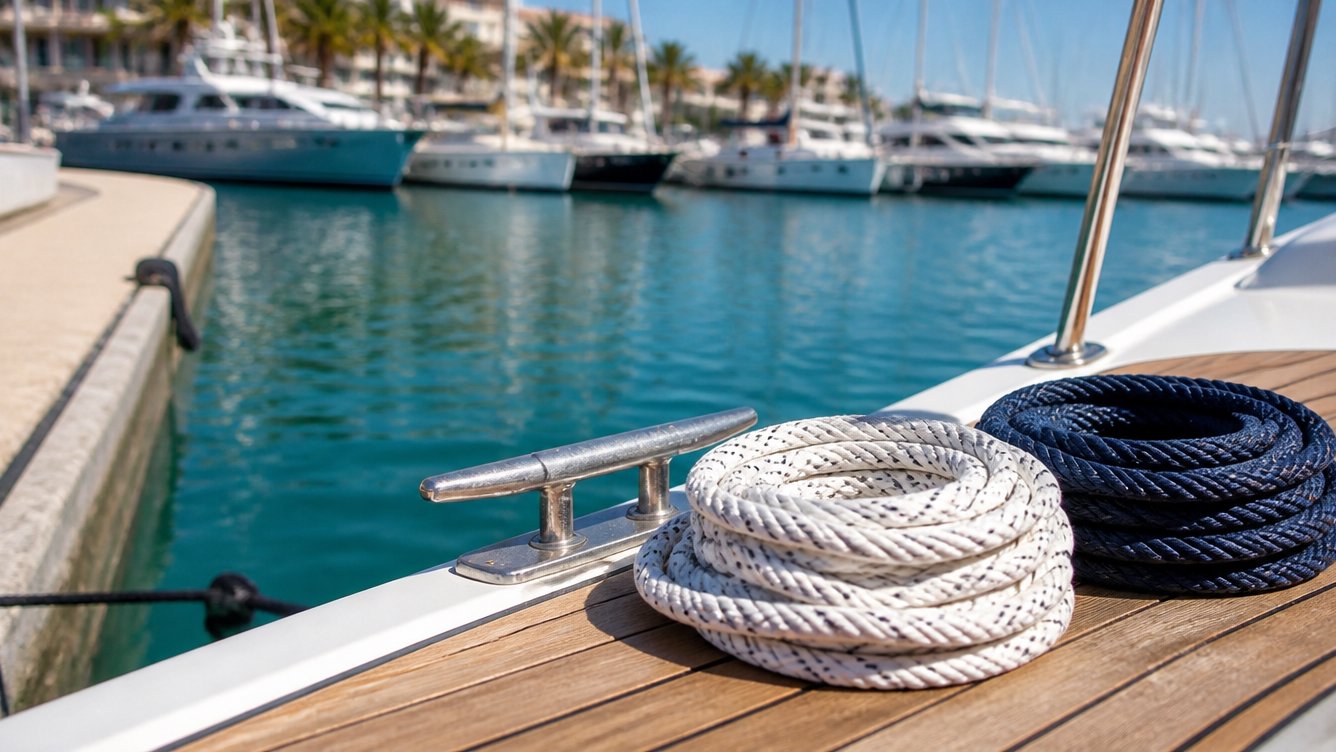
Mooring lines work long hours even when the boat looks quiet in harbour. In the Balearics, the sun, the salt, chafe against rings and pontoons, and the wind shifts through the May to October season all accelerate their wear. Choosing the right material and size matters, but inspecting them often matters even more: a line that looks intact may have lost strength exactly where it shows least.
Polyester or nylon: what each material brings
Polyester is a common choice for permanent or frequently used mooring lines. It offers good resistance to sunlight, keeps a moderate stretch and stays manageable when wet. That lower elasticity helps keep the boat well positioned in its berth, especially when we want to limit unnecessary movement against fenders or the pontoon.
Nylon, on the other hand, stands out for its ability to stretch and absorb snatching loads. It can be useful where there is slamming, swell or sudden movement, but that elasticity also means checking that the boat doesn't end up too close to a chafe point when the line loads up. In both cases, the braid, the construction of the rope and the quality of the finish influence how it behaves.
There is no single material that suits every situation. We weigh up the type of boat, its mooring points, the harbour's exposure and the actual use before recommending a solution. You can find options in our ropes and anchoring equipment category.
How to choose the size without improvising
Diameter and length should match the boat's length, displacement, mooring layout and the loads to be expected. Don't pick a rope just because it "looks thick": an oversized line can be awkward to handle and may not sit well on certain fittings, while an undersized one will have less margin under repeated strain.
We also need to think about the length required to make eye splices, spread the loads and keep correct working angles. Bow lines, stern lines, breast lines and springs don't do exactly the same job. We aim to avoid excessive tension and leave margin for changes in level or movement, without letting the boat reach anything it could strike or chafe against.
If you are not sure what size suits your setup, it is better to review it with a professional before changing all your lines. For fleet, workshop or professional mooring needs, you can consult us directly.
The melted rope end and other signs of wear
A rope end that is burnt, hardened or has fused fibres usually points to intense friction or heat generated by chafe. It is not merely cosmetic damage: that section may have lost part of its working strength. It is worth cutting back and re-finishing the end only if enough length remains and the rest of the rope is in good condition; otherwise, we recommend replacing it.
It is also time to retire a line when we see broken fibres, crushed sections, abnormal stiffness, extreme discolouration, persistent mould, cuts, an exposed core or wear concentrated at eyes and contact points. Inspect it both dry and wet, running it through your hand and paying attention to the stretches that pass through cleats, rings or fairleads.
Chafe protection is not an accessory
A well-placed chafe sleeve or guard greatly extends a rope's working life. It must cover the exact point where the line bears or works against a surface, without stopping the line from being adjusted or simply moving the chafe somewhere else. After a storm, a demanding manoeuvre or a long stay in harbour, check that the protection is still in position and is not holding moisture or dirt.
Renewing a line in time costs less than dealing with the consequences of a failure. Faced with significant wear, doubts about loads or damage at the mooring points, we don't take risks: we get a professional's assessment.