 marinepoint


Trailers: getting ready for autumn transport
2026-09-07 · Marine Point
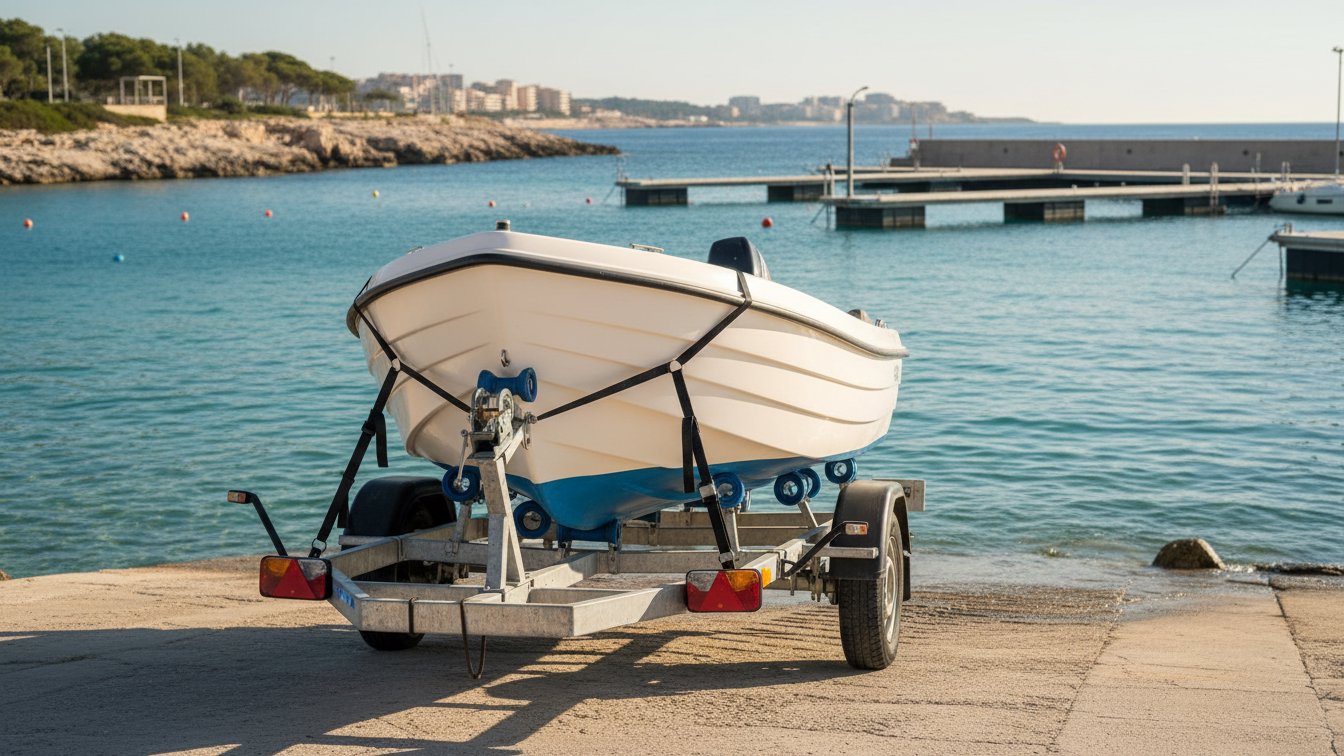
After a busy season on the water, moving your boat to the boatyard or its winter location deserves just as much attention as winter storage itself. In the Balearic Islands, salt, journeys to slipways and inter-island logistics take a particular toll on trailers. Checking rollers, lighting, bearings and tie-downs in good time reduces unexpected issues on the road and prevents damage to the hull. We recommend checking each point carefully and, if you spot play, significant corrosion or have any doubts about safety, consulting a professional.
Rollers and supports: ensuring the hull rests where it should
The rollers, bunks and supports must properly follow the shape of the hull. Before loading the boat, we check that they turn freely without sticking, that they have no cuts, deformation or bent fittings, and that their shafts are secure. A seized roller can mark the hull during launching or recovery, while a poorly adjusted support concentrates weight in areas that are not designed for it.
It is also advisable to check the winch, cable or strap, and the bow hook. They must work in alignment, with no visible wear or corrosion that could affect their operation. We do not improvise with knots, deteriorated ropes or items not intended to secure the boat.
Lights and connections, essential on the road
Trailer lighting is no minor detail: before setting off, we check the position lights, brake lights, indicators, reversing lights where applicable, and number plate light. Moisture and the salty environment can affect connectors, earth connections and lamp holders, even if the trailer has spent little time in the water.
We check that the plug connects firmly, that the cable does not rub on the ground or become tight when turning, and that the housings are clean and securely fixed. If a light fails intermittently, it is preferable to identify the cause before travelling. In our trailer accessories category, you will find equipment to keep these items in good condition.
Bearings, wheels and brakes: no shortcuts when checking
Bearings are particularly affected after immersion at slipways. We look for noises when turning, play in the wheel, abnormal heating after a journey, or traces of contaminated grease. Any of these signs warrants a professional inspection before setting off.
We also check the general condition of the tyres, including the spare wheel if there is one: cuts, cracks, deformation and pressure in accordance with the manufacturer's instructions. We do not forget the wheel bolts, mudguards, axle, coupling and, on trailers fitted with them, the braking system. A visual check is no substitute for technical maintenance where there is wear or a lack of response.
Securing the boat for the journey
The boat must be immobilised at both the bow and stern, with no possibility of moving over the rollers. The main tie-down to the winch must not be the only retaining point: we use suitable straps, in good condition and correctly tensioned, secured to strong points on the trailer and the boat.
We remove or secure loose items on board, protect contact areas and check the load after the first few kilometres. To resolve queries about a specific set-up or find the right spare part, you can contact our team. Since 2006, we have worked to make maintenance practical: we recommend what you need, not the most expensive option.