 marinepoint


Winterising hull, anodes and batteries at the end of the season
2026-08-31 · Marine Point
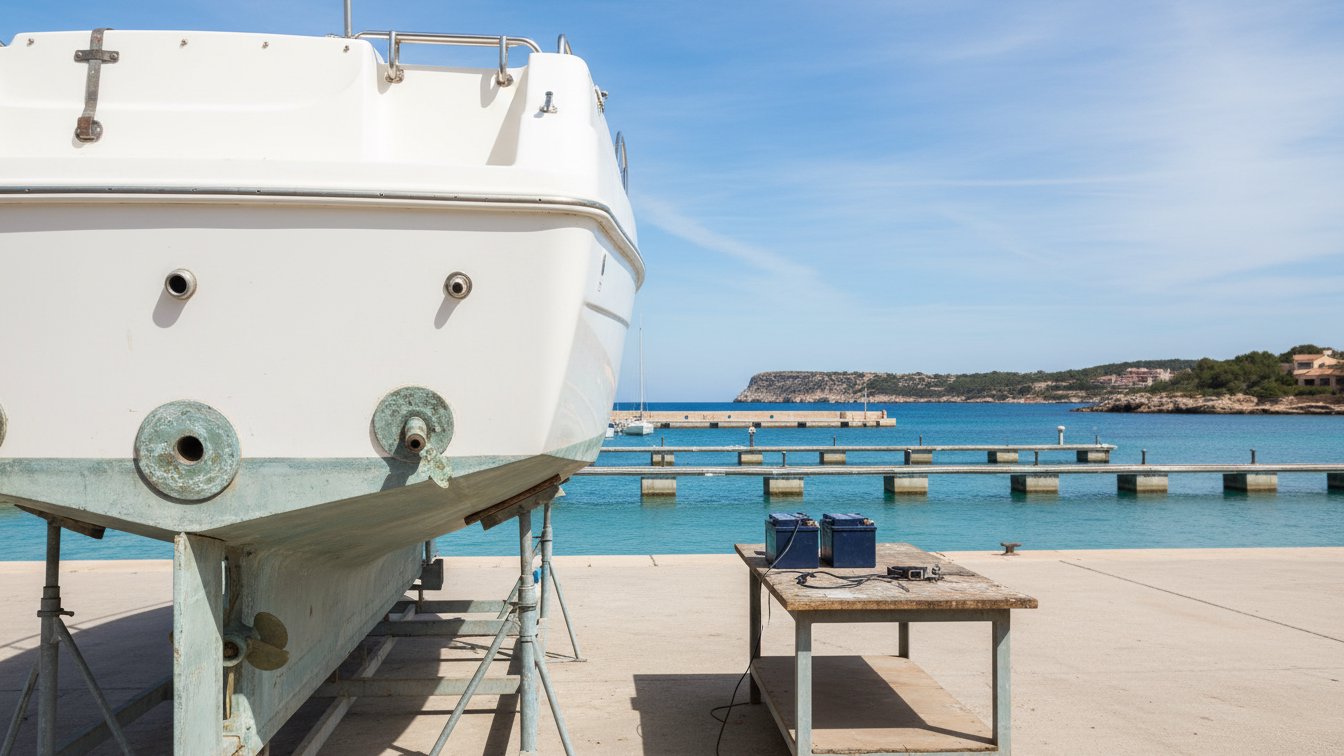
When the intensive sailing season winds down, it is worth setting aside a quiet day to prepare the boat for the months of lighter use. In the Balearics, the heat, the salinity and the long spells at anchor between May and October leave their mark, especially on the underwater hull and the electrical installation. Good winterising is not about doing more tasks than necessary, but about checking in time whatever can prevent breakdowns and surprises on the next outing.
Inspect the underwater hull out of the water
Haul-out is the best moment to look over the hull calmly. We look for marine growth, areas where the protective coating has lost effectiveness, small knocks, scratches and possible signs of osmosis or moisture. Posidonia and other plant remains should not stay attached for months: they can get in the way of a proper inspection and encourage localised problems.
We also check through-hulls, intake grilles, propeller, shaft or sterndrive, depending on each boat's configuration. If we find play, corrosion, cracks or any damage we cannot assess with confidence, we recommend seeing a professional before relaunching. It is better to settle a doubt on the hard than to discover a problem mid-season.
Anodes: small components, essential job
Anodes protect the submerged metal parts from galvanic corrosion. It is not enough to confirm they are still fitted: we need to assess their wear, their fixing and the condition of the connections and parts they are meant to protect. An anode that is excessively consumed has stopped doing its job, but one that is practically untouched can also mean the system is not working as it should.
We don't recommend substituting materials or modifying the installation without knowing the compatibility with the engine, the transmission and the type of water the boat sails in. In harbours with many boats and shore connections, a professional check can be especially important to rule out stray currents.
Preparing the batteries for the lay-up
Batteries suffer when they sit discharged, exposed to heat or connected to residual loads for weeks. Before the lay-up, we check their general condition, the cleanliness of the terminals, their securing and the absence of corrosion or damaged cables. Then we always follow the instructions of the battery manufacturer and of the boat itself when deciding whether to disconnect, keep a maintenance charge or remove the battery.
If we use a maintenance charger, it must be suitable for the battery type and used on a checked, dry and ventilated installation. We should never improvise connections or handle electrical components without experience: as well as protecting the equipment, we avoid personal risk. In our electrics and accessories section you will find material to keep the installation in order.
Leave a list for the next fit-out
Writing down what was checked makes the return to the water much simpler: haul-out date, anode condition, pending tasks and any odd behaviour noticed. That list is useful both for owners and for whoever does the follow-up maintenance — especially practical with the islands' particular logistics.
If you need to confirm which spare part or material fits your installation, we can guide you from experience, without recommending more than you need. For technical queries or trade orders, you can write to us from our professionals page.